
Boost Your A-Level Chemistry Scores the Smart Way, Not the Hard Way!
Spaced repetition is one of the simplest ways to make A-level Chemistry revision more effective. This article explains how revisiting topics over time can improve memory, strengthen understanding, and reduce last-minute cramming.
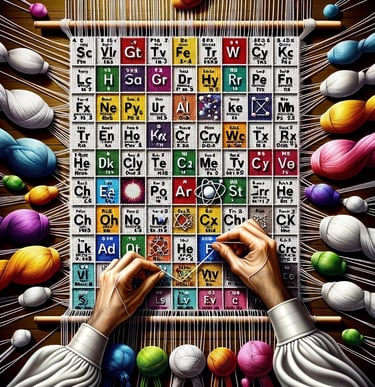
Spaced repetition for A-level Chemistry
Today, with a bit of help from AI — useful for speed, less so for actual chemistry judgement — I want to explain one of the simplest ways to get more out of your revision time.
It is called spaced repetition, and it is useful not just for A-level Chemistry but for most subjects where you need to remember and apply a lot of material over time.
Why cramming is a weak strategy
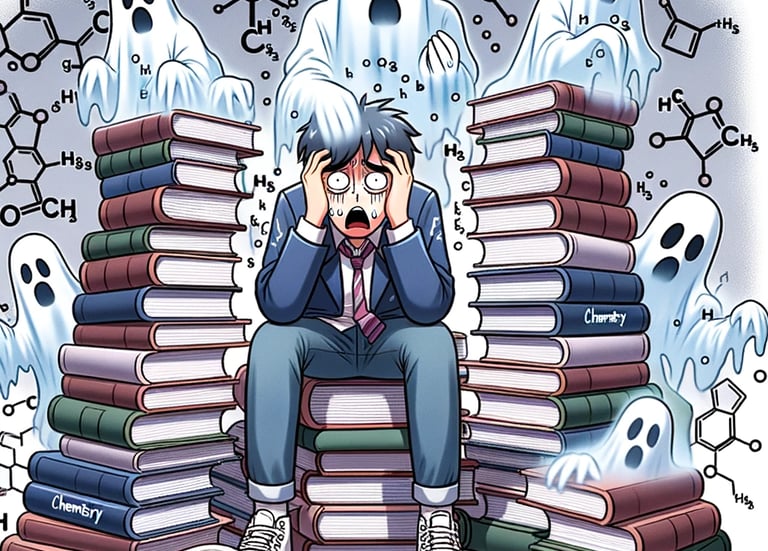
Most students have done it at some point: leave things too late, panic slightly, then spend hours trying to force everything into their head the night before a test.
The problem is that cramming is mainly a short-term survival tactic. You may remember enough to get through tomorrow’s test, but a lot of it disappears quite quickly afterwards.
That is not much use in A-level Chemistry, where topics build on each other and earlier work often comes back later in the course.
What spaced repetition actually is
Spaced repetition means coming back to material again and again over time, rather than trying to do too much of it in one sitting.
The basic idea is simple:
study something
leave it for a while
come back to it before you have completely forgotten it
repeat that cycle over time
This is far more effective for long-term retention than doing one huge block and then not looking at the topic again for weeks.
What this looks like in practice
Imagine you have five hours available across a week for Chemistry.
A lot of students would try to do all five in one go. That feels productive, but it often is not the best way to make the knowledge stick.
In many cases, it is better to spread that time out — for example, an hour a day across five days. That keeps the material active in your mind and gives you repeated opportunities to recall, apply and strengthen it.
You are not necessarily doing more work. You are just arranging it in a way that your memory handles better.
Why this helps with exam questions
Students often work through a set of questions on one topic until they start recognising the answers. At that point it can feel as though they know it well, but familiarity is not the same as secure understanding.
Spacing the questions out over several days helps avoid that trap.
It also makes it easier to mix in questions from older topics. That matters because Chemistry is full of links between ideas. You do not want bonding in one mental box, energetics in another, and equilibria floating around like loose furniture. You want them connected.
A simple way to use it
A practical version might look like this:
Daily sessions
Do a manageable amount each day rather than one huge block. For many students, around an hour works well.
Start by recalling
Before looking at notes, spend a few minutes testing what you remember from the previous session. That act of retrieval is part of the learning.
Mix newer and older topics
Do not just revise the topic you are currently on. Keep older material circulating as well.
Be consistent
This works best when it becomes routine rather than something you do only when panic sets in.
Get help when you are stuck
Spaced repetition helps you remember material, but it does not replace understanding. If a topic genuinely does not make sense, sort that out first.
Why it is worth doing
Students often think better revision means more hours. Sometimes it does. But often the bigger gain comes from using the same hours better.
Spaced repetition helps because it:
improves long-term retention
reduces the need to relearn topics from scratch
makes revision feel more steady and less panicked
helps students keep older parts of the course alive while still moving forward
That is especially useful in A-level Chemistry, where success depends on both memory and application.
It is not a magic trick. It is just a smarter way to organise your revision.
Dr Torben Smith
Torben@tutorchem.co.uk
(+44) 07749 597452


Private A-level Chemistry tuition supplied by me as a sole trader is exempt from VAT, so no VAT is added to my fees.