
The Three-Pen Approach: A Proven Strategy for A-Level Chemistry Success
Discover the Three-Pen Technique for A-level Chemistry revision. It is a simple, effective way to use past paper questions properly, spot weak areas, and improve exam technique.
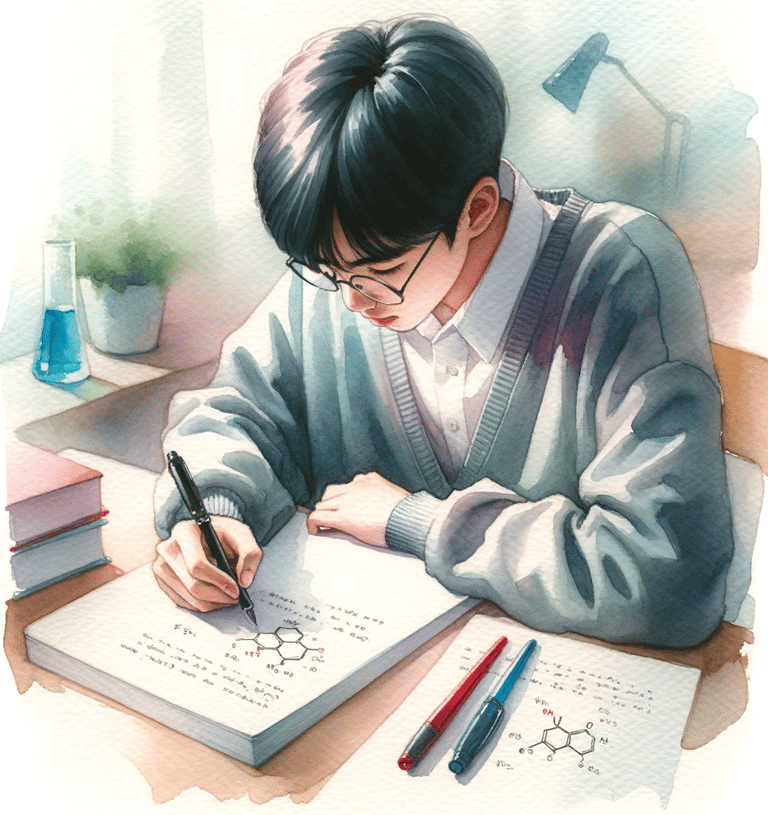
The Three-Pen Technique
One of the best ways to improve in A-level Chemistry is to use past paper questions properly.
A lot of students either do questions completely unaided and get stuck, or they look at the mark scheme too early and end up recognising answers rather than learning how to produce them. The three-pen technique is a simple way round that.
I’ve used this approach with lots of students because it helps them separate three different things:
what they can do on their own, what they can work out with support, and what the mark scheme actually requires.
Step 1: Black pen — first attempt
Start by answering the questions in black pen under proper exam conditions.
That means no notes, no textbook, no videos, no mark scheme, and ideally no interruptions. Treat it like the real thing.
If there are gaps, leave them. If you cannot do a question, move on. That is useful information, not some sort of failure.
Step 2: Blue pen — work things out
Later on, come back to the same paper with a blue pen.
Now you can use your notes, textbook, videos, or help from a tutor to fill in what you missed and improve weak answers. The one rule is: do not look at the mark scheme yet.
This part matters because it forces you to think, research and learn, rather than just copy the official answer.
Step 3: Red or green pen — mark it properly
After another break, mark your work using the official mark scheme in a red or green pen.
Correct mistakes clearly and add brief notes to show what you missed. This is where you start to see patterns in your errors, whether that is weak recall, poor wording, missed definitions or not being specific enough for the mark scheme.
I also recommend working out two scores:
the score from the black pen only
the score from the black and blue pen combined
The black pen score shows what you could do independently under pressure. The combined score shows what you were capable of once you had time to think and review.
Use grade boundaries carefully
You can compare your score to grade boundaries, but be cautious.
Students often mark themselves a little generously, especially on longer written questions, so it is sensible to be slightly conservative. I often suggest mentally knocking a bit off and treating the result as a rough guide rather than a guaranteed grade.
Read the examiner reports
This is one of the most overlooked parts of revision.
Examiner reports often reveal exactly where students throw marks away: vague wording, incomplete definitions, failure to use key chemical ideas, or answers that are scientifically sensible but not specific enough.
Reading them helps you understand not just what the answer is, but why students lose marks.
Go back to the weak areas
A few weeks later, go back and redo the questions you originally struggled with.
That delay is important. It makes it much less of a memory exercise and much more of a genuine test of whether you now understand the chemistry.
That is where the method really pays off. Students can see whether they have actually improved, rather than just become familiar with the page.
Why it works
The real strength of the three-pen technique is that it stops revision becoming blurred.
It shows you:
what you already know
what you can learn with support
what the exam board actually wants
That makes revision more honest, more targeted and usually far more effective.
If you want to improve your exam technique in A-level Chemistry, this is one of the simplest and most useful methods I know.



Torben@tutorchem.co.uk
(+44) 07749 597452


Private A-level Chemistry tuition supplied by me as a sole trader is exempt from VAT, so no VAT is added to my fees.